Real Change Starts with What People Do. Not What They Say.
Why transformation fails when it's all talk — and how to build behavior-first systems that actually shift culture.
Why transformation fails when it's all talk — and how to build behavior-first systems that actually shift culture.

Transformation happens through action, not just agreement
Change doesn't happen because people agree with a strategy. It happens because they act differently. This blog explores why most transformation efforts stall at the level of intention — and how to build systems that drive real, observable behavior change.
The town hall was electric. The new strategy was unveiled. Leaders spoke with conviction. Teams nodded in agreement. Posters went up. Emails went out. And then… nothing changed.
Sound familiar?
This is the illusion of agreement — when people say the right things, but don't do them. Not because they're resistant. But because the system around them hasn't changed.
"Culture is not what people say. It's what they do when no one's watching."
Real change doesn't start with slogans. It starts with behavior.
Organizations often mistake communication for transformation. They launch campaigns, town halls, and training sessions — but fail to shift what people actually do.
We've seen it in manufacturing plants, defense labs, and energy firms. Leaders announce a new direction, but frontline behaviors stay the same. The strategy is clear. The intent is strong. But the system hasn't changed.
And without a system, behavior defaults to habit.
If you want to know whether change is working, don't look at sentiment surveys. Look at behavior.
Are supervisors giving feedback differently?
Are teams running new rhythms?
Are decisions being made faster, closer to the ground?
Are new collaboration patterns emerging?
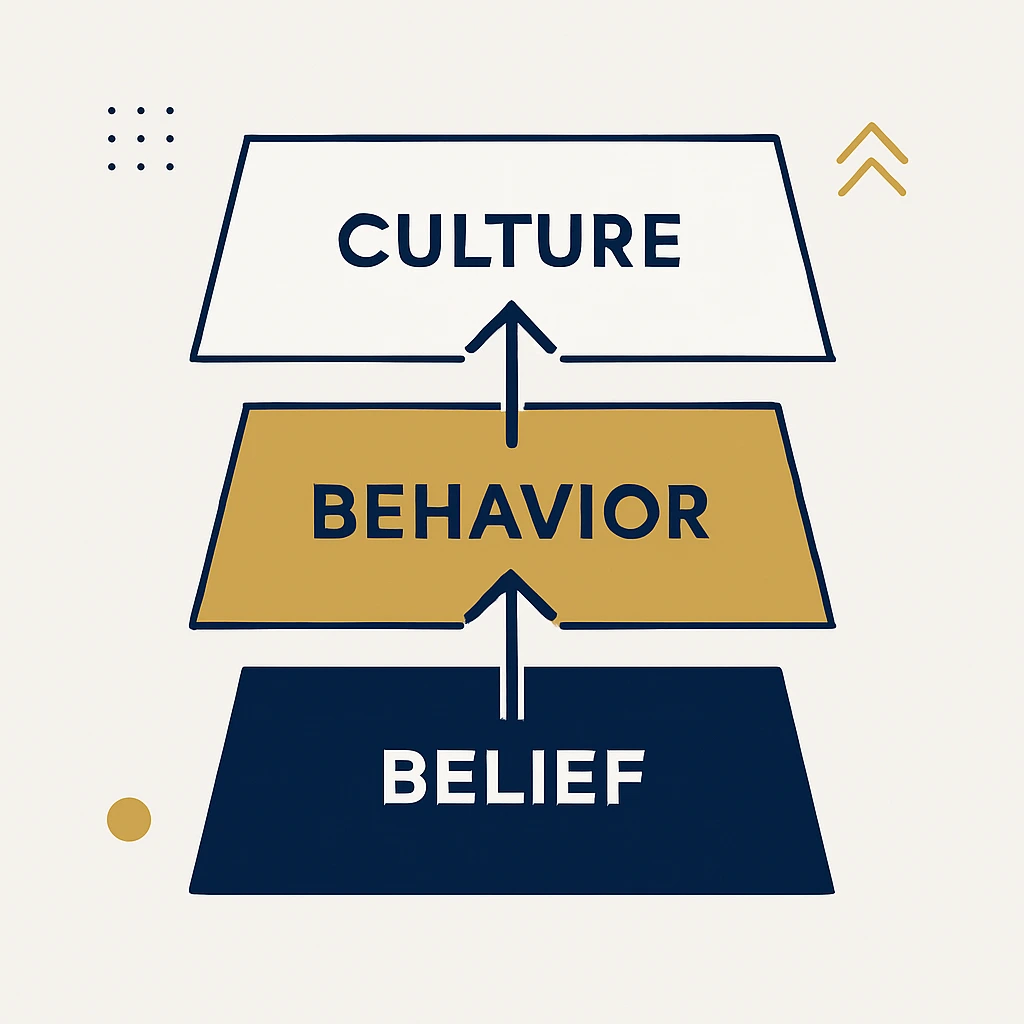
The three components of the Execution Edge framework
Behavior is the earliest signal of transformation. It's visible. Trackable. Coachable. And it's where culture lives.
"You don't change culture by telling people what to value. You change it by changing what they do."
We don't start with values. We start with verbs.
Track what leaders and teams actually do, not just what they achieve
Leaders go first — visibly and vulnerably demonstrating new behaviors
Daily, weekly, monthly rituals that reinforce new behaviors consistently
Teams hold each other to the new standard through structured feedback
We don't ask people to believe in change. We ask them to practice it.
An energy company wanted to shift from a compliance culture to a performance culture. The strategy was solid. The messaging was strong. But nothing moved.
We helped them flip the script.
Instead of launching another campaign, we built a behavior-first system:

48-hour retrospective sprint in action
Leaders began modeling performance conversations in team huddles
Scorecards tracked coaching behaviors, not just outcomes
Peer feedback became a weekly ritual
Recognition was tied to action — not just attitude
"We stopped trying to convince people. We started showing them."
And the culture began to shift — not because people talked about it, but because they lived it.
Real change doesn't start with belief. It starts with behavior. And when behavior shifts, belief follows.
If you want to change culture, don't ask people what they think. Watch what they do. Then build systems that make the right behavior the easy behavior.
"Success isn't a spike. It's a system."
"Build capability. Not codependency."
When change becomes a daily practice — not a quarterly campaign — transformation stops being a goal. It becomes a habit.